As work patterns continue to evolve, organisations are navigating a workforce that spans more generations than ever before. With Baby Boomers, Generation X, Millennials, Generation Z, and the emerging Generation Alpha working alongside one another, business priorities are shifting toward creating workplace environments that support a wide range of expectations, working styles, and levels of digital confidence. Rather than designing for any single demographic, the challenge is to create inclusive, adaptable workplaces that enable collaboration, productivity and long-term resilience across generations.
First, let’s take a closer look at the five generations shaping today’s workplace.
The generations making up today’s workforce
Each generation has been shaped by distinct social, economic and technological contexts, influencing how they work and interact with the modern workplace.
- Baby Boomers (1946–1964) often value structured environments, with quieter spaces that support focused work, formal meetings and detailed discussions.
- Generation X (1965–1980) typically favours efficient, flexible settings that balance collaboration with opportunities for concentration.
- Millennials (1981–1996) tend to prioritise purpose-driven workplaces, flexibility and environments that support technology-enabled collaboration and social connection.
- Generation Z (1997–2012) expects seamless digital integration, visual communication tools and spaces that reflect strong commitments to sustainability, inclusion and transparency.
- Generation Alpha (2013–present) is likely to enter the workforce with expectations shaped by AI, personalisation and immersive technology, redefining what flexibility and responsiveness mean at work.
Moving beyond generational labels
Generational characteristics provide useful context, but they are only a starting point. Designing workplaces around labels alone can oversimplify differences and result in environments that feel restrictive or misaligned with how people actually work.
A more effective approach is to focus on real working behaviours across your organisation. By understanding patterns of focus, collaboration, movement and technology use, you can create spaces that support different working styles without prioritising one group over another. This shifts workplace strategy away from age-based assumptions and towards inclusive, human-centred environments that support engagement and performance for everyone.
Here, we highlight what matters when designing for a multigenerational workforce.
Accessibility as the baseline for inclusion
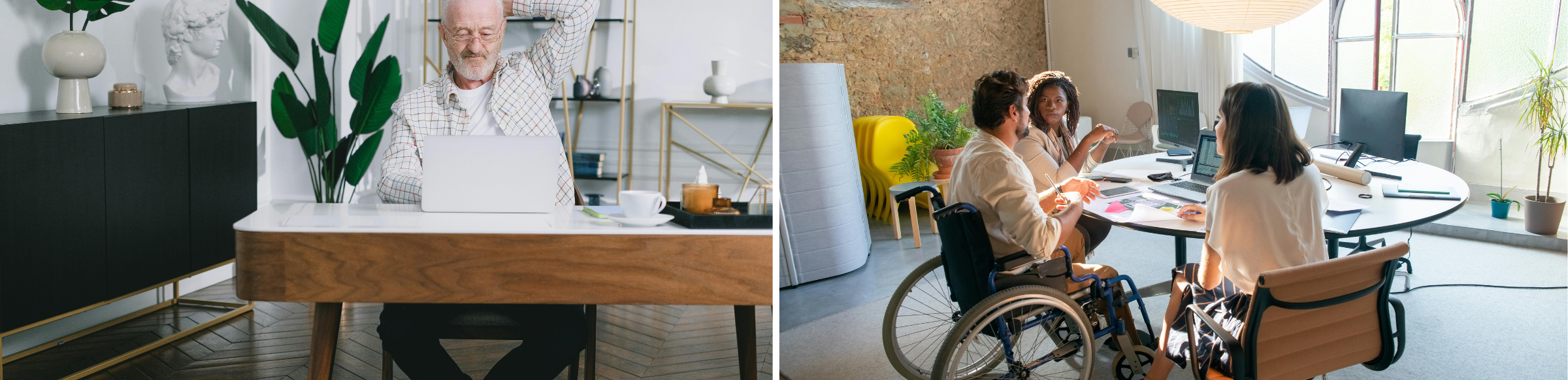
Accessibility works best when you approach it as a proactive design principle, not a compliance exercise, with the goal of ensuring everyone can participate fully, regardless of age, ability, or working style.
Let’s begin with three key considerations:
Physical accessibility and comfort: Clear layouts, ergonomic and adjustable furniture, appropriate lighting and well-managed acoustics all help remove barriers to comfort and productivity. These elements support employees at different life stages, from those who require greater physical support to those who benefit from spaces that reduce distractions, strain, and fatigue.
Sensory and neurodiversity considerations: Providing a range of environments, from quiet focus areas to more active collaborative spaces, gives people choice in how they work. Measures such as acoustic zoning, clear wayfinding and consistent spatial cues help create workplaces that feel predictable and easy to navigate. A 2025 report referenced by Forbes found a 32% increase in neurodiversity-focused initiatives in 2024, reinforcing the growing importance of inclusive design.
Digital accessibility in hybrid environments: As hybrid working becomes standard, it’s just as important to consider the digital workplace as the physical one. Intuitive video conferencing tools, simple room-booking systems and consistent technology setups help ensure people can collaborate effectively across physical and virtual spaces. As explored previously in our blog on the 5 tech trends shaping the future of the office, well-designed technology reduces friction and enables participation rather than creating barriers.
Choice and flexibility in how people work
Providing choice is essential to creating a workplace that supports multiple generations. With different roles, responsibilities and working styles coexisting within the same organisation, a one-size-fits-all approach to office design no longer works. Flexibility in how and where people work supports greater autonomy, productivity and satisfaction across generations.
Again, we’ve split this into three considerations:
Supporting focus and collaboration: A well-balanced workplace supports both concentrated individual work and collaborative activity. Offering a mix of enclosed focus areas, open collaboration zones and informal meeting spaces allows organisations to accommodate different needs without prioritising one working style over another.
Evolving work patterns: While some people value consistency and routine, others prefer more fluid, self-directed ways of working. This is reflected more broadly, with 91% of employers now offering some form of flexible working and 61% viewing flexible options as important to recruitment. Implementing flexible layouts, adaptable furniture and spaces that can shift purpose throughout the day helps support these work patterns without the need for constant redesign.
Activity-based working and spatial choice: Activity-based working allows people to choose spaces based on task and energy levels rather than role or hierarchy. From quiet libraries and phone booths to project spaces and social hubs, a diverse range of settings supports different ways of working.
Connection and collaboration across generations
While choice and flexibility support individual ways of working, connection enables multigenerational workplaces to thrive. Strong relationships across teams and age groups support knowledge sharing, build trust and help maintain a cohesive organisational culture.
When it comes to building connections across generations, these areas matter most:
Spaces that encourage interaction: Shared spaces such as breakout areas, cafés and social hubs create natural points of connection. As explored in a previous Strategy Hat blog on generational workplace needs, these spaces work best when they support interaction without making it mandatory.
Supporting knowledge sharing and mentorship: Spaces designed for mentoring, coaching and learning enable both structured and informal knowledge transfer, helping organisations retain institutional knowledge while supporting skill development.
Balancing collaboration with cognitive comfort: Collaboration should be balanced with the need for focus and psychological comfort. Providing quieter retreat spaces alongside collaborative areas allows people to engage on their own terms.
Technology as an enabler, not a barrier
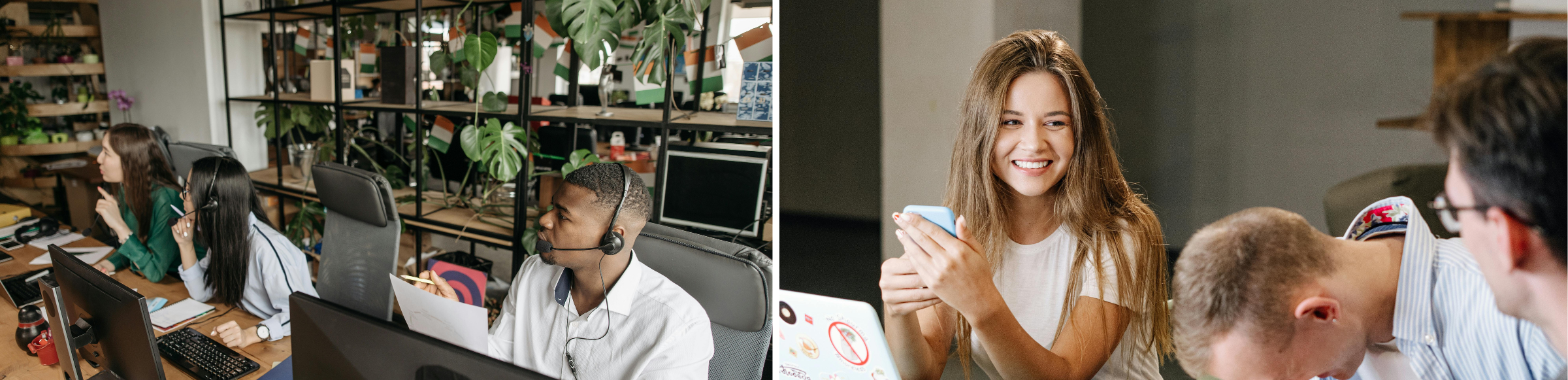
Technology underpins how today’s workplaces function, particularly in hybrid environments. In multigenerational organisations, its role is to enable participation and collaboration across different levels of digital confidence.
In practice, this centres on three areas:
Designing intuitive, inclusive technology: Technology works best when it’s simple and consistent. Prioritising ease of use helps reduce friction for those less confident with digital tools, while still meeting the expectations of more digitally fluent employees.
Supporting hybrid collaboration: With 64% of employees reporting that their organisation operates on a hybrid model, reliable AV setups and well-designed hybrid meeting spaces are no longer optional. They play a key role in making sure everyone can contribute equally, wherever they’re working from.
Understanding how people use technology: The most effective technology strategies are shaped by how people actually work. By engaging with employees, you gain valuable insight into where tools support productivity and where they create friction, helping you better align technology with people, space and culture.
Future-proofing for emerging generations
Designing a multigenerational workplace is not only about responding to today’s needs but also preparing for what comes next.
Looking ahead, here are the areas that stand out:
Purpose, values and authenticity: Deloitte’s 2025 Gen Z and Millennial Survey found that only 6% of respondents view reaching a leadership position as their primary career goal, signalling a shift away from traditional success markers towards purpose, impact and meaningful work. Organisations need to clearly articulate their values and ESG commitments, ensuring these are reflected in both culture and workplace design.
Personalisation and autonomy: Younger generations are accustomed to personalised, responsive digital experiences and greater control over how they work. This translates into expectations for workplaces that offer choice, flexibility and individual agency. Modular layouts, adaptable furniture and technology-enabled environments allow spaces to respond to different needs rather than enforcing fixed ways of working.
Designing for change and longevity: Future-proofing is less about predicting trends and more about building adaptability into the workplace. As team structures, technologies and work patterns continue to shift, environments need to evolve without constant disruption. Flexible infrastructure and multi-use spaces help organisations remain resilient and relevant over time.
Designing workplaces that work for everyone
Creating a successful multigenerational workplace is not about designing for age groups in isolation. It is about understanding how people work and creating environments that support those needs over time.
The most effective multigenerational workplaces are built on accessibility, choice, connection and inclusive technology. Together, these elements create environments where people at every stage of their career can work comfortably, share knowledge and contribute to a shared sense of purpose.
For further insight into creating a multigenerational workplace, you can speak to someone from our team here.
