Attracting and retaining younger talent has become a key priority for many organisations. As a result, Gen Z is often at the centre of conversations about workplace strategy and office design. Yet despite the attention they receive, many assumptions about what this generation wants from work are based on perception rather than evidence.
Here, we explore five common myths about Gen Z at work and what they reveal about the future of workplace design.
Myth 1: “Gen Z doesn’t want to come into the office”
Hybrid working has led many organisations to assume that younger employees no longer see value in the office. While choice remains important, the latest research suggests Gen Z’s relationship with the workplace is more nuanced than simply preferring to work remotely.
Rather than viewing the office as somewhere to complete individual tasks, Gen Z increasingly values it as a place to build relationships, share knowledge and feel connected to colleagues. Deloitte’s 2026 research found that social connection plays an important role in workplace satisfaction, with around two-thirds of Gen Z respondents reporting having at least one close friend at work. Those with close workplace friendships are also significantly more likely to remain with their organisation for more than five years.
When considering what draws Gen Z into the workplace, three areas stand out:
Learning through proximity: Informal conversations, mentoring and day-to-day collaboration continue to provide valuable opportunities for professional development that are difficult to replicate remotely.
Building connection and belonging: Shared spaces encourage relationship-building, strengthen organisational culture and help employees develop a stronger sense of belonging.
Creating purpose for the commute: Rather than providing desks for individual work, workplaces increasingly need to support collaboration, innovation and knowledge sharing.
The challenge for organisations is no longer encouraging employees to return to the office. Instead, it is creating workplaces that provide genuine value when they do.
Myth 2: “Office perks are what attract younger talent“
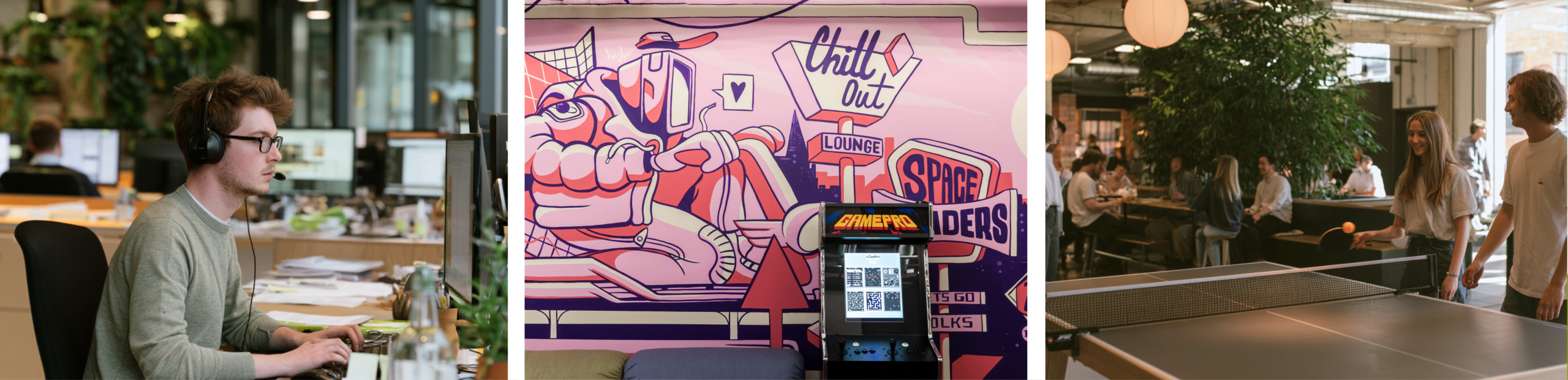
Workplace perks have long been associated with attracting younger employees, from games rooms and free snacks to breakout spaces designed around social interaction. While these features can contribute positively to workplace culture, they are rarely the deciding factor when choosing an employer.
Instead, there is growing evidence that Gen Z places greater value on benefits that provide meaningful, practical support. According to the Reward & Employee Benefits Association (REBA), younger employees are driving demand for benefits such as green car schemes, home and technology discounts, wellness initiatives and cycle-to-work programmes. These are valued because they help address everyday financial, health and lifestyle needs, rather than acting as symbolic workplace perks.
This does not mean social spaces have become less important. Collaboration areas, cafés and informal meeting spaces continue to play a valuable role in encouraging connection, strengthening relationships and supporting ways of working. Their value, however, lies in the experiences they enable rather than the amenities they contain.
Myth 3: “Technology is all that matters“
As digital natives, Gen Z is often assumed to expect the latest technology at every turn. In reality, they value technology that makes work easier, not simply newer.
As AI becomes embedded in everyday work, Deloitte found that 74% of Gen Z already use AI in their day-to-day roles, a significant increase from the previous year. However, many organisations are struggling to keep pace, with around one-third saying their employer is not adequately preparing employees for the changes AI will bring.
This highlights an important distinction. Investing in new technology alone is unlikely to improve the employee experience. People also need the confidence and skills to use it effectively. For employers, the priority should be creating workplaces where technology removes friction, supports collaboration and is backed by the training employees need to adapt as new tools emerge.
Myth 4: “Gen Z isn’t ambitious”
Gen Z is sometimes characterised as being less driven than previous generations, placing wellbeing ahead of career progression. However, the evidence suggests their ambitions are simply different from what many employers expect.
Deloitte’s latest research found that 44% of Gen Z prefer steady career progress over rapid promotions, reflecting a broader shift towards careers that feel sustainable rather than focused solely on speedy progression. The report also found that only 6% see reaching a leadership position as their primary career goal, not because they lack ambition, but because they are placing greater emphasis on work-life balance and long-term fulfilment.
For workplace designers and employers, this means creating environments that support continuous learning, knowledge sharing and professional growth, while recognising that career success is increasingly measured by more than just climbing the corporate ladder.

Myth 5: “Designing for Gen Z means designing for one generation”
As conversations about the future of work continue, it’s easy to view Gen Z’s expectations as unique. In reality, many priorities among younger employees reflect broader shifts in how people want to work, rather than a change exclusive to one generation.
The World Economic Forum highlights that today’s workforce spans five generations (Baby Boomers, Generation X, Millennials, Generation Z, and Generation Alpha), each with distinct experiences, expectations and ways of working. Rather than focusing on generational differences, it argues that future-ready organisations should create people-centred workplaces that foster knowledge sharing, continuous learning and adaptability across the workforce.
The organisations best placed for the future will be those that listen to the changing needs of their people, rather than designing for one generation alone. By prioritising meaningful connection, intuitive technology, opportunities for learning and growth, and the flexibility to support different ways of working, businesses can create workplaces that not only attract younger talent but also support a more engaged, productive and resilient workforce for years to come.
To discuss how these principles can be applied to your workplace, speak to a member of our team.
